POLICY POSITIONS
1. Put Teachers at the Center of Academic Decision-Making
There is no “silver bullet” for education: not a new curriculum, not more tests, not another consultant. The people who changed my life and my children’s lives were teachers.
Durham has more than 2,000 certified teachers, and every one of them is someone’s favorite. I’m married to one of them.
Yet we do not have a system that consistently:
- Elevates teachers as academic leaders
- Gives them real authority over instruction
- Protects their ideas from being buried in bureaucracy
As a board member, I will fight for:
- Expanded teacher-leadership roles in every school
- Real teacher-led decision-making structures at the school and district level
- Transparency so teacher ideas don’t disappear into closed-door processes
- Protected time for collaboration, planning, and professional growth
- Intentional engagement of our most experienced classroom educators
2. Build a Budget That Puts Classrooms First
Durham families are generous. We spend more per student than the state average, but we still struggle with large class sizes, under-resourced classrooms, and stressed staff. That’s a budgeting problem, not a generosity problem.
Right now, too much of our money flows into central office structures, consulting, and processes that don’t directly improve instruction.
I will push the Board to:
- Take a deep dive into DPS finances, not just react to crisis headlines
- Rebuild the budget from the ground up—starting with what classrooms need
- Align spending with what actually drives student learning, especially literacy
- Provide clear, public explanations of how and why budget decisions are made
- Stop rubber-stamping budget patterns that creep further away from students
Without new leadership on the board, we will keep bouncing from one budget crisis to the next. Our kids can’t afford that.
3. Fix Classified Pay and Create a Fair, Simple Salary System
The recent classified pay crisis revealed deep problems in DPS salary structures and oversight:
- Raises promised, then reversed
- An attempt to claw back money from more than 1,000 employees
- A budget adopted that could never work
- Some bBoard members kept in the dark while others knew what was coming
Today, DPS uses 39 salary schedules and over 1,175 pay bands to pay about 5,000 workers. 245 of those bands cover 2,400 teachers; 930 cover 2,600 classified staff. For comparison, the federal government pays over 1.5 million employees with about 150 pay bands.
It’s confusing, inequitable, and ripe for manipulation.
My plan:
- Living wage for all employees—now. No one else in DPS needs a raise until workers at the bottom of the pay scale can afford to live in Durham.
- Simplify the entire pay system. Move to a transparent structure—such as 10 levels with 5 steps each (50 total steps).
- Protect current employees through grandfathering and use a longevity bonus pool to honor long service.
- Stop using inflated projections to block raises for low-paid workers, especially when those projections quietly multiply raises for top administrators.
We owe our workers clarity and dignity. When we fix the pay structure, we can finally refocus on instruction and student growth.
4. Safe, Welcoming Schools – Not Enforcement Zones
School safety is about more than locks and drills. It’s about making sure students, staff, and families are safe from harm—including harm caused by poorly coordinated law-enforcement or immigration-enforcement actions.
A school’s mission is to ensure:
- The safety and education of students
- The safety of teachers and staff
- The protection of parental and student rights
That mission must come first—unless a judge orders otherwise.
I support:
- Requiring all law enforcement to interact with DPS through our MOU process
- Suspending enforcement operations in and around schools except when there is a real, immediate threat
- Clear policies stating that the Board and Superintendent decide who is allowed on school property, when, and for what purpose
- Protecting immigrant families from being targeted at or near schools
School should be the safest place outside their home—not a place of fear.
5. Justice, Inclusion, and Belonging
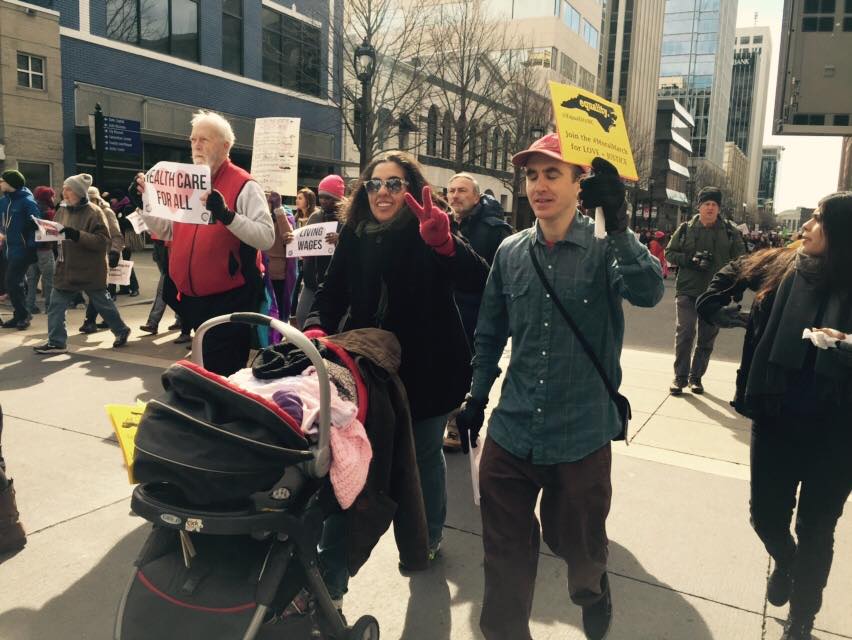
As a Palestinian American, a mother, and a movement organizer, I understand what it means to worry about safety, belonging, and basic dignity.
In Durham Public Schools, justice looks like:
- Strong support for multilingual learners
- Culturally sustaining curriculum and practices
- Real engagement with parents who work long hours or multiple jobs
- Trauma-informed approaches instead of punishment-only discipline
- Accessible communication in multiple languages
Our children bring rich histories and cultures into the classroom. Our policies should honor that, not erase it.
6. Governance that Listens and Learns
Voters deserve board members who:
- Are not planning their re-election from day one
- Are not profiting from their public role
- Are accountable to the community—not to backroom deals or factions
My goals on the Board are:
- Living wages
- Strong support for teachers
- Improved student achievement—especially literacy
- Better engagement with families
- Real oversight of the budget
- More money in classrooms
- Greater efficiency at central office
- Better meetings where board members come prepared and aren’t constantly surprised
Above all, my goal is to listen, especially to experienced teachers and staff whose voices are too often ignored.
 Nadeen Bir for Durham Board of Education, District 2A